
Indoor climate & air quality
Datacenters
Visualizing airflow and temperature distributions inside datacenters
Indoor climate & air quality
Visualizing airflow and temperature distributions inside datacenters
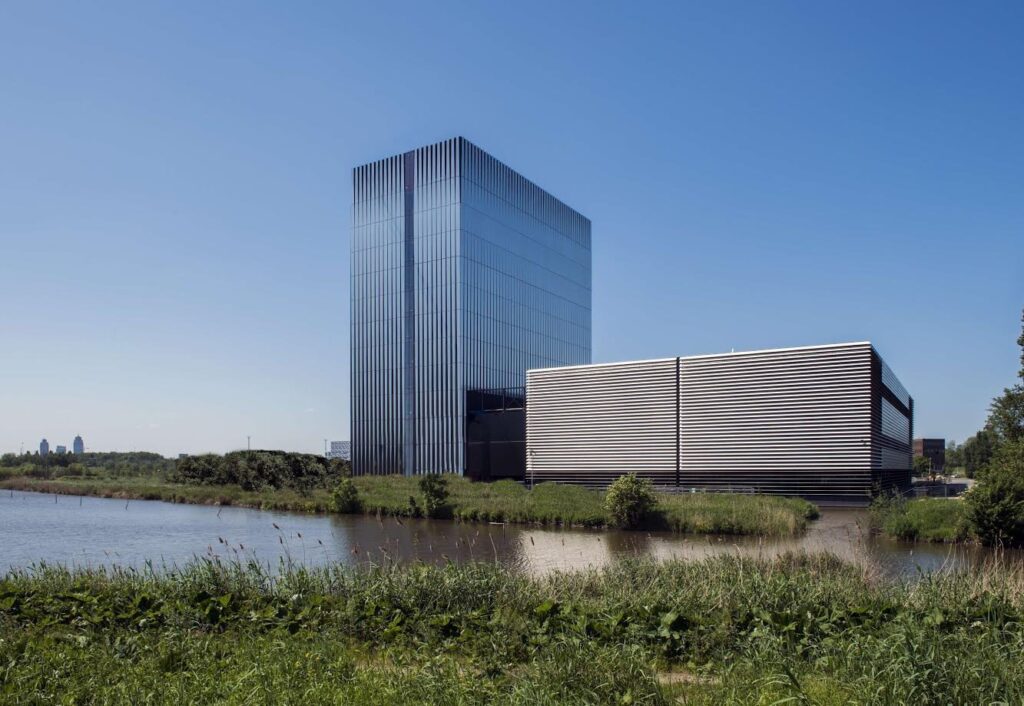
Over the past decades, the use of cloud-based IT services has grown exponentially, leading to a rapid increase in the number of large commercial datacenters. These facilities consume large amounts of energy, resulting not only in high operational costs for owners and operators, but also in growing pressure on the electricity grid.
A significant share of a datacenter’s total energy consumption is used for air cooling. Improving cooling efficiency therefore offers substantial potential to reduce energy use, lower costs, and enhance operational reliability. Actiflow supports datacenter stakeholders by optimizing cooling systems using advanced Computational Fluid Dynamics (CFD) simulations.
We primarily work with datacenter designers, operators and owners.. Our involvement typically starts during the design phase of new datacenters or when existing facilities undergo changes in layout, capacity, or operational use.
Across our projects, two key themes consistently emerge:: reliability and cost efficiency.
Our simulations and expert advice help clients assess and improve both aspects, ensuring compliance with Service Level Agreements (SLAs) while maintaining optimal performance under a wide range of operating conditions.
Actiflow performs detailed CFD simulations to analyze airflow patterns and cooling efficiency within datacenter rooms. Each project starts with the creation of an accurate 3D model, including elements such as:
By explicitly modeling these components, we can realistically simulate air recirculation and temperature distributions throughout the facility.
Based on defined boundary conditions, we evaluate both reliability and energy efficiency:
In some projects, clients ask us to also optimize the cooling system during build out, when heat loads are below 100% and often unevenly distributed. Our simulations then form the basis for practical recommendations, such as optimal CRAH settings or adjustments to the room layout (e.g. perforated tile placement). This allows clients to reduce operating costs without risking SLA violations.
For these cases, Actiflow performs wind simulations that account for the building geometry and surrounding environment. These studies help identify and mitigate wind-related risks.
For more information, please refer to our Wind Engineering services.
Our primary tool for datacenter analysis is CFD simulation. When required, we complement simulations with on-site measurements in existing facilities. These measurements may include parameters such as:
The measured data is used to define accurate boundary conditions, ensuring reliable and realistic simulation results.
For more information about our methodology and expertise, please refer to our Services page.
Used tools:
Our team consists of engineers and consultants with a background in fluid dynamics and CFD, combined with expertise in building physics, product development, measurement & control, optimization and prototyping. To support our services, we have a large HPC cluster and we have access to several test facilities.





Our expertise is only a few clicks away. Just send us an email or fill out the form on our contact page, and one of our experts will contact you as soon as possible.

Made by 