
Aerodynamics for R&D
Industrial food processing
Advanced airflow and fluid flow analysis for high-performance food processing equipment
Aerodynamics for R&D
Advanced airflow and fluid flow analysis for high-performance food processing equipment
Airflow and liquid flow play a critical role in food processing equipment and have a direct impact on process efficiency, product quality and energy consumption. Processes such as heating, cooling, baking, freezing, drying, mixing and food transport are all strongly influenced by the way air and liquids move through the system.
In many applications, the uniformity of airflow or fluid flow inside processing rooms, ovens, freezers, mixers, vertical farming systems and other food processing equipment determines the final product quality. Non-uniform flow can lead to issues such as uneven heating, inconsistent freezing, longer processing times or unnecessary energy losses.
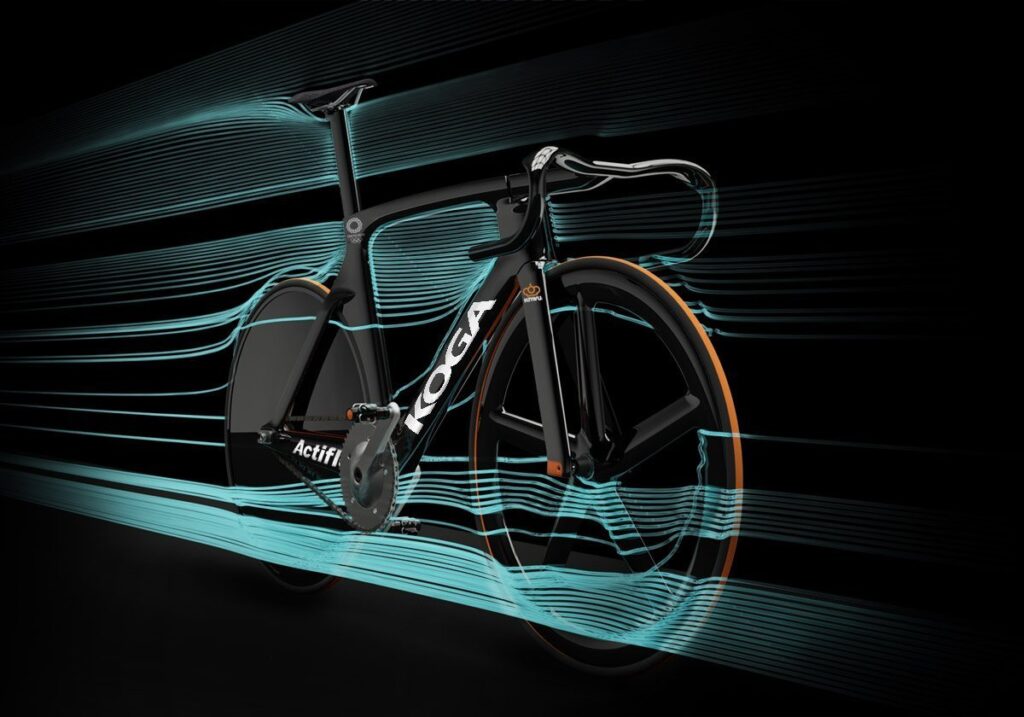
By visualising and analysing airflow and heat transfer, Actiflow helps manufacturers and food producers understand these issues and identify opportunities for improvement. Our approach increases product quality and throughput while reducing energy consumption and operational costs.
We primarily work with food processing equipment manufacturers that want to improve the performance, reliability and efficiency of their systems. In some cases, we also collaborate directly with food producers, optimising the throughput and performance of equipment in real production environments.
Our clients range from small, local companies with limited R&D capacity to large, international organisations with extensive in-house engineering teams. Depending on your needs, we can:
Our services cover the entire spectrum from flow analysis to the design of complete food processing systems.
Using advanced CFD (Computational Fluid Dynamics) simulations, we visualise airflow, liquid flow and heat transfer inside your equipment. This provides deep insight into system behaviour, efficiency and potential bottlenecks.
We support both:
When performance issues arise, we explain why they occur and how they can be solved. Proposed improvements are tested and validated through new simulations. Whenever possible, we remain involved through implementation to ensure that the solution delivers the expected results in practice.
When involved in full system design, we also support:
Our primairy tool for the analysis and design of airflows and liquid flows in food processing equipment is CFD-simulation. Simulations help us to visualize and understand the processes at hand. Based on the simulation results, we design better systems or we solve issues with existing equipment.
In many projects, we complement simulations with on-site measurements. Measurement data can be used as input for simulations and to validate simulation results, ensuring high accuracy and reliability.
Our projects typically follow an iterative process:
The number of iterations depends on system complexity, but thanks to our extensive experience in food processing applications, we minimise development time while delivering robust, high-performance solutions.
Used tools:




Our expertise is only a few clicks away. Just send us an email or fill out the form on our contact page, and one of our experts will contact you as soon as possible.

Made by 