
Indoor climate & air quality
Production facilities & warehouses
Advanced CFD simulations for HVAC and filtration system design
Indoor climate & air quality
Advanced CFD simulations for HVAC and filtration system design
Indoor climate and air quality in production facilities and warehouses have a major impact on both employee well-being and the reliability of industrial processes. Certain manufacturing activities can generate heat, fumes, dust, or airborne pollutants that create uncomfortable or even unsafe working conditions.
Well-designed HVAC and filtration systems are therefore essential to maintain a healthy, productive, and energy-efficient indoor environment.
We provide our analysis and consultancy services to:
Our services are mainly used during the design of new halls, renovation of existing facilities or when changing the use of the facility. The main goal of our work is to validate proposed HVAC/filtration system designs, reduce energy consumption and ensure compliance with client requirements, building codes and safety standards.
We support clients in designing, validating, and optimizing HVAC and filtration systems in industrial environments.
Our services include:
Visualize airflow, temperature, and air quality for objective workplace assessments conditions and the functioning of the HVAC or filter system. If required, we propose design improvements or operational adjustments to enhance indoor climate performance.
We support manufacturers and suppliers of HVAC systems, filtration systems, and air handling units by validating the performance of their solutions in specific industrial environments.
CFD simulations help demonstrate how systems perform under realistic operating conditions, supporting technical sales and project development.
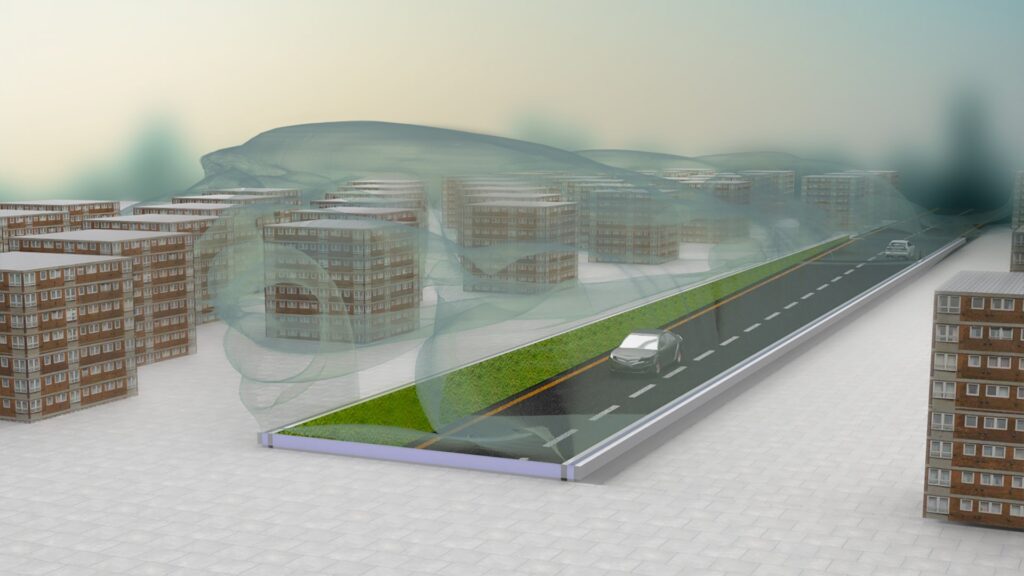
Large industrial buildings often use rooftop air handling units (AHUs) and chillers. These systems interact strongly with the outdoor environment, where wind and ambient temperature can significantly influence performance.
At Actiflow, we simulate the impact of:
This allows us to assess:
Where necessary, we propose design solutions to prevent or mitigate short-circuiting effects.
Our primary tool for analyzing indoor climate and air quality is Computational Fluid Dynamics (CFD). When required, we complement simulations with on-site measurements to accurately characterize existing indoor conditions.
We first develop a detailed 3D CFD model of the facility, including:
This ensures that the simulations accurately represent the real operating environment.
The CFD model is then used to simulate airflow and air quality inside the facility. Typical outputs include:
Cross-sectional visualizations showing:
3D visualizations showing:
Based on the simulation results, we propose design improvements and mitigation measures for the ventilation and filtration systems.
When relevant, we evaluate the impact of proposed changes by performing additional CFD simulations, allowing clients to make informed design decisions with quantified performance improvements.
Ready to transform your facility’s indoor climate and air quality?
Contact Actiflow to discuss how our CFD simulations can support your next project or optimization challenge.





Our expertise is only a few clicks away. Just send us an email or fill out the form on our contact page, and one of our experts will contact you as soon as possible.

Made by 