

Wind Engineering
Studying wind and its effect on people and structures in the built environment
Studying wind and its effect on people and structures in the built environment
We use wind tunnel testing and numerical simulations to help our clients to assess the effects of wind on their projects. Our clientele spans real estate developers, architects, engineers, planning authorities, municipalities, airports and port authorities. Our expertise is based on hundreds of projects for our clients in the Netherlands, Belgium, the UK, the Middle East and beyond.
Discover our broad range of services in wind engineering:


Whitepaper
High-rise buildings in urban areas can cause wind discomfort or even danger. Resources like the “Manual Wind discomfort & Wind Danger (April 2023) by Simone Taks and Emiel Arends (Municipality of Rotterdam, The Netherlands) offer valuable guidance for architects and developers to address these issues.
In our whitepaper, we summarise the key points of Chapter 6 of this manual, and we share our insights based on our extensive experience in wind comfort assessments. Discover various strategies to prevent and solve wind related issues in your development projects.
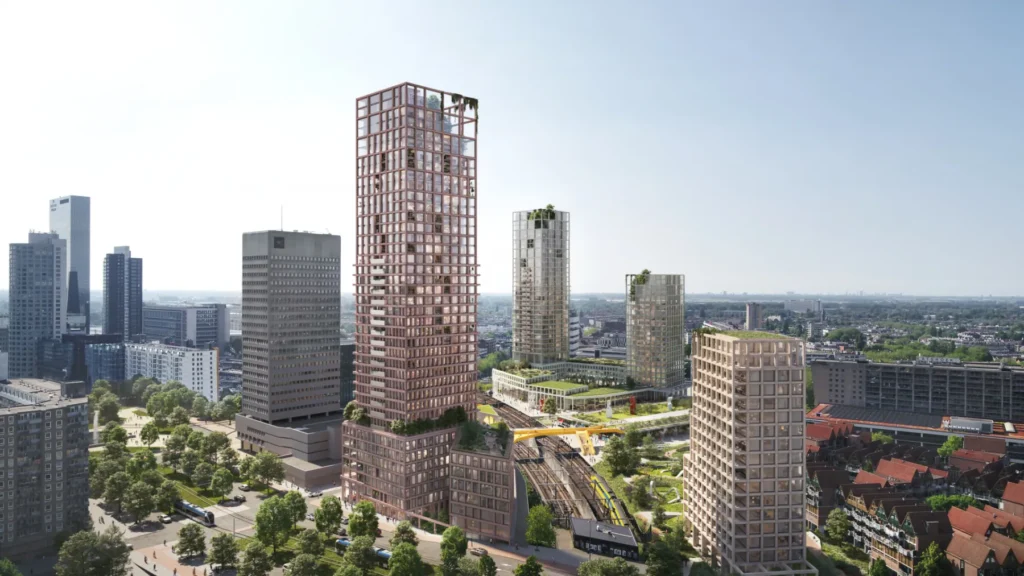
Our projects demonstrate our wealth of experience in the field of wind engineering. From single buildings and local urban developments to entire cities and airports, each wind assessment is unique and shows how our expertise helps to minimize negative wind effects and create healthy, liveable and safe outdoor spaces.






We offer the full range of tools required for any type of wind assessment. The exact methodology we use depends on our client’s question and the project phase. For example, a wind-comfort study during the concept design stage requires a different approach than a structural load assessment in detailed design.
For every challenge, we propose the most suitable method—whether it involves numerical simulations, wind-tunnel testing, or on-site measurements. While we have preferred techniques for certain assessments, we remain flexible and ready to adapt our approach to best meet our client’s needs. Please explore our Services to see which methodology we recommend for each type of study.
Our experience shows that we add the most value when involved from the very beginning of a project. Identifying wind-related issues early keeps the time and budget needed for mitigation to a minimum. If the same issue arises late in detailed design, any delay or design change becomes far more costly and disruptive.
We typically start by reviewing the situation presented by our client. Whenever possible, we provide immediate initial feedback based on our expertise, helping clients avoid spending time and resources on assessments that are unlikely to meet their objectives.
Once our analysis is complete, we highlight potential issues and propose practical solutions. Together with the client, we determine which mitigation measures are feasible and which follow-up assessments are needed to validate them. In this way, we collaborate closely until a solution is achieved that satisfies all stakeholders.
All our work fully complies with relevant national building codes, standards and guidelines, ensuring that our deliverables can be used directly for planning and permitting applications.
Used tools:
Made by 