

Wind Engineering
Pedestrian Wind Comfort
Studying the impact of proposed developments on the comfort and safety of pedestrians
Wind Engineering
Studying the impact of proposed developments on the comfort and safety of pedestrians
An acceptable wind microclimate around buildings and in open public spaces is becoming increasingly important to ensure pedestrian comfort and safety. Depending on its massing, shape and orientation, a new building can create adverse wind conditions that impact the quality and functionality of outdoor spaces around the building. In extreme cases, wind accelerations can even raise safety concerns. This is why we help our clients to identify possible wind-related issues and propose practical guidelines to solve them.
We provide pedestrian wind microclimate studies and wind comfort assessments for a wide range of clients, including developers, architects, engineers, municipalities and planning authorities. Our studies help to ensure a safe, comfortable and compliant wind environment.
For developers, architects and engineers, we assess pedestrian-level wind conditions around proposed buildings and building complexes. These wind studies analyse the impact of new developments on the local wind climate in public outdoor spaces, such as streets, squares and building entrances.
In many regions, it is mandatory to demonstrate compliance with local wind comfort and wind safety standards as part of the planning or permitting process. A professionally conducted pedestrian wind study is often required by planning authorities to prove that a development provides an acceptable wind climate for pedestrians.
We support our clients throughout all phases of the development process, from early design stages to final approval. Identifying wind-related risks early in the project is essential to minimise the time, costs and design changes needed for effective wind mitigation measures.
For municipalities and planning authorities, we offer a dedicated range of wind engineering and advisory services, including:
At Actiflow, we provide expert support at every stage of the project design process—from initial strategic advice to comprehensive pedestrian wind microclimate studies for planning applications.
Our extensive experience demonstrates that the greatest value is achieved when we are involved from the outset. Early identification of wind-related challenges allows for effective mitigation, helping to minimise both time and costs. Addressing wind issues later in the design phase often results in more expensive and disruptive solutions.
Below, we outline the key assessments and services we recommend at each project phase. These can be tailored to meet your specific needs and project requirements.
At the earliest stage, Actiflow provides expert guidance based on a qualitative assessment of the expected local wind climate. This assessment draws on local meteorological data and our extensive experience with similar projects. The resulting expert opinion delivers valuable input for establishing a robust concept design, helping to anticipate potential wind challenges before detailed designs are developed.
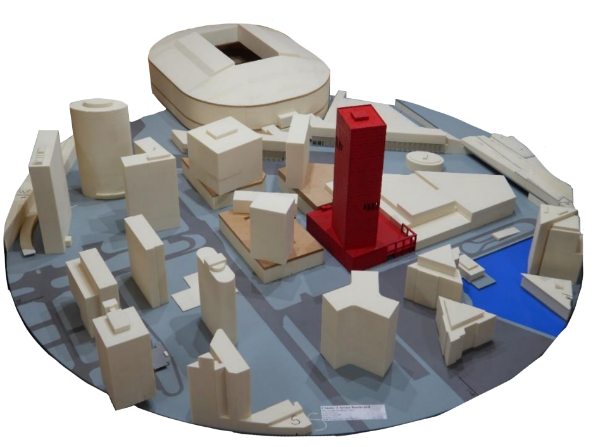
Once initial massing or building volumes are available, we perform a CFD quick scan to evaluate the local pedestrian wind climate using numerical simulations. At this stage, the proposed development and its surroundings are represented as simplified volumes.
A quick scan provides early insights into expected wind comfort and safety levels. Where necessary, we suggest wind mitigation measures. The results guide informed decision-making as the concept design evolves, helping to reduce costly design changes later.
Depending on planning authority requirements, Actiflow can either update the initial quick scan to reflect the schematic design or carry out a detailed CFD study based on the latest design iteration.
Our assessments at this stage ensure that design modifications do not introduce new wind-related issues. If mitigation measures are required, we can update the simulation model to directly test their impact, providing actionable insights for the design team.

In the final design phase, the pedestrian wind microclimate is thoroughly assessed using detailed CFD simulations, wind tunnel testing, or a combination of both, depending on official requirements.
This final assessment supports the planning application and demonstrates compliance with relevant wind comfort and safety standards. If the wind microclimate has been addressed consistently in earlier phases, the results should confirm a safe and comfortable pedestrian wind environment, with minimal surprises during submission.
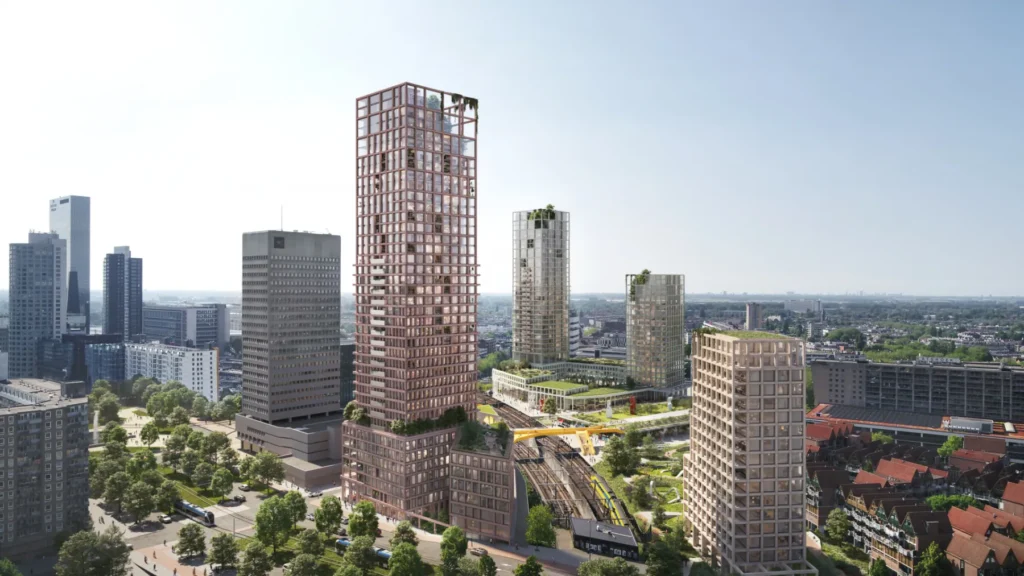
All our pedestrian-wind microclimate studies meet the quality requirements set out in the relevant local and international standards, building codes, and guidelines. We typically present results using Lawson LDDC, City Lawson, or NEN 8100 criteria. As recognised experts in wind comfort assessment, Actiflow is currently contributing to the national committee responsible for updating the Dutch NEN 8100 standard, with the revised version expected in early 2027.
In the early phases of building design, we may intentionally deviate from the full official standards for practical reasons. Early design stages often require rapid iterations, and adapting our approach enables us to keep pace with our clients’ schedules. Thanks to our extensive expertise, we can accelerate these analyses without compromising the quality or reliability of the results.





Our expertise is only a few clicks away. Just send us an email or fill out the form on our contact page, and one of our experts will contact you as soon as possible.

Made by 