

Tools
Advanced (CFD) Flow Simulations
Delivering measurable insights by visualizing the invisible
Tools
Delivering measurable insights by visualizing the invisible
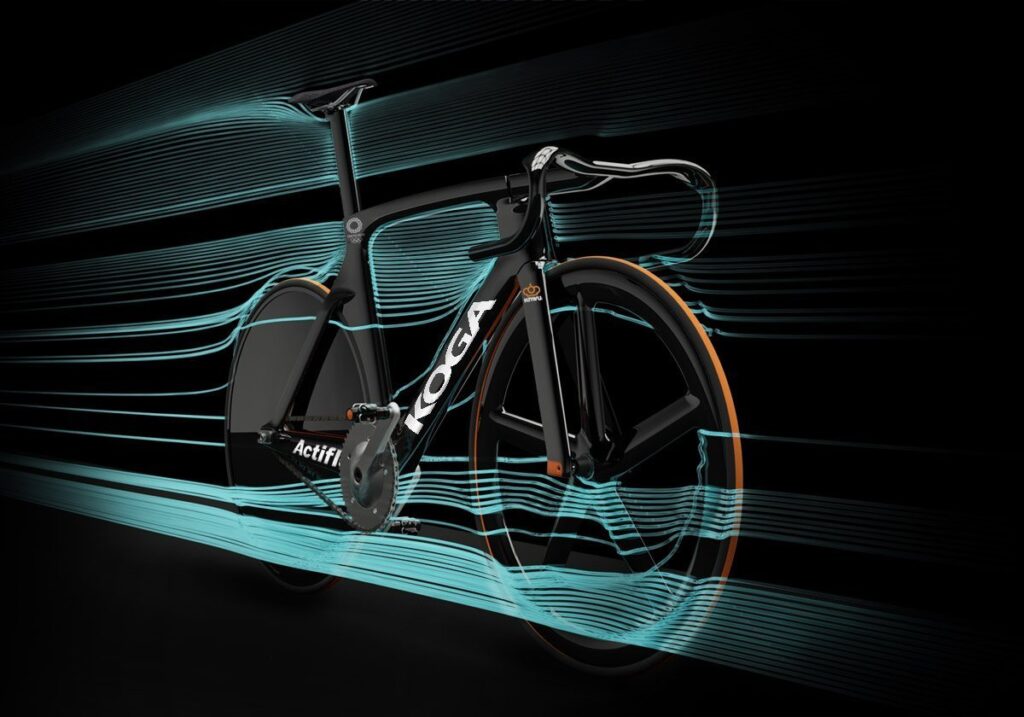
At Actiflow, we visualize and quantify gas and liquid flows using Computational Fluid Dynamics (CFD). CFD is a powerful numerical simulation method that analyzes fluid flow, heat transfer, and related physical phenomena within a virtual environment.
CFD is a valuable tool to assess the airflow around and inside buildings, machines, systems, etc. By digitally replicating real-world conditions, we help clients make informed decisions without the cost, risk, and limitations of physical testing.
CFD is typically applied in two key scenarios:
We analyze current products, buildings, or systems to:
In the conceptual phase of new developments, CFD enables:
At Actiflow, CFD forms the foundation of most of our services — from wind engineering studies to indoor climate assessments and R&D projects across multiple industries.
The CFD-process contains the following steps:
Every CFD simulation starts with a CAD model of the product, system, or building. When we receive a CAD model from our client, we process the model to prepare it for CFD, meaning that we remove all irrelevant details, and create a closed flow volume.
Next, we define the computational domain — the volume in which fluid flow will be calculated. Within this domain, we generate a high-resolution computational mesh containing millions of volume cells. Mesh refinement is applied near surfaces, in boundary layers and in regions where we expect high flow gradients. Mesh quality and resolution are critical for simulation accuracy and stability.
Before running the simulation, we select the most suitable solver, numerical models and boundary conditions. Depending on the type of simulation, we can choose from several CFD packages. When all input is ready, we run the simulation on our own HPC (High Performance Computing) cluster. For each individual cell in the mesh, the CFD software numerically solves the governing fluid flow equations. Depending on the complexity of the simulation, this typically takes a few hours to a few days.
A CFD simulation generates a large dataset containing flow velocities, pressure distributions, temperature fields, etc. These results are then processed into clear visualizations and graphs showing the flowfield and the performance of the product or building. Based on the results, we identify potential risks and inefficiencies and we propose design improvements. In close collaboration with our clients, we evaluate the feasibility of proposed solutions. This often results in an iterative design optimization process, where simulations are refined until all performance and stakeholder requirements are met.
Our expertise is only a few clicks away. Just send us an email or fill out the form on our contact page, and one of our experts will contact you as soon as possible.

Made by 