

Wind Engineering
Detection of exhaust short circuiting
Assessing the risk of polluted or hot exhaust air being re-entrained into air intakes
Wind Engineering
Assessing the risk of polluted or hot exhaust air being re-entrained into air intakes
Good indoor air quality and thermal comfort are important for both human wellbeing and reliable industrial operations. In the design of HVAC systems, it is generally assumed that outdoor air intakes receive clean, uncontaminated and ambient air. In reality, however, local wind conditions and building geometries can cause polluted or heated exhaust air to be transported back towards nearby air intake openings.
This phenomenon, known as exhaust short-circuiting, can significantly compromise indoor air quality, system performance and operational safety. We support our clients by identifying potential short-circuiting scenarios and quantifying the associated risks using advanced wind and airflow analysis.
Exhaust short-circuiting can affect a wide range of buildings and facilities. We typically assist clients in the following sectors:
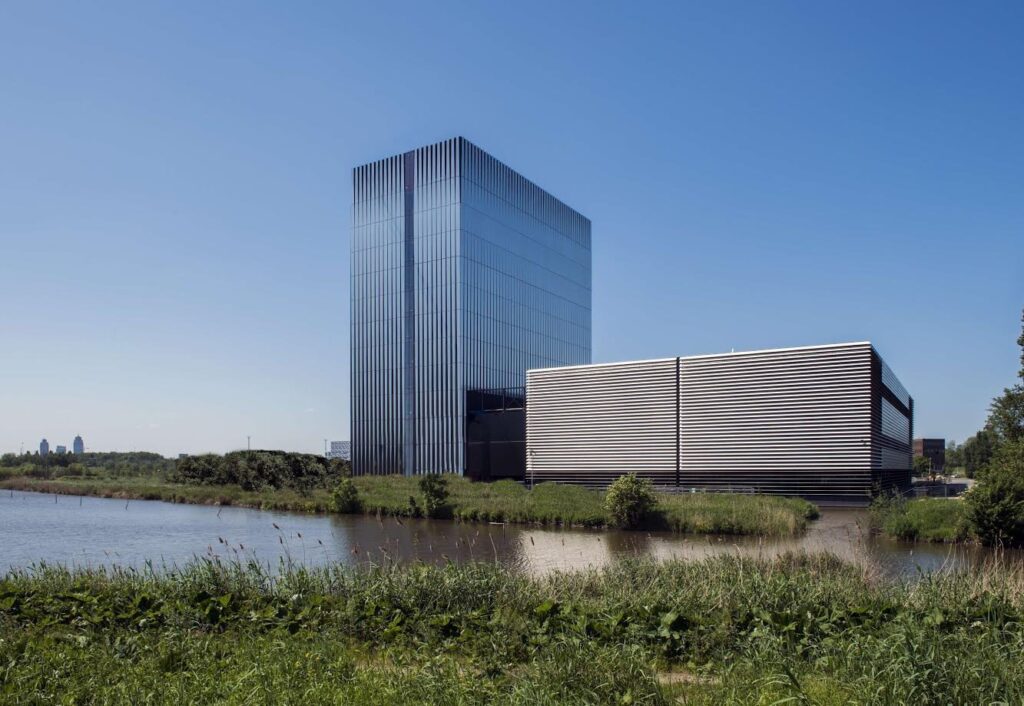
For data centers, we assess the risk of hot exhaust air being drawn back into cold air intakes. Re-entrainment of warm air can reduce cooling efficiency, increase energy consumption and pose serious risks to critical IT equipment.
In industrial and residential environments, preventing polluted exhaust air from entering HVAC intake systems is essential to maintain acceptable indoor air quality and comply with health and safety standards.
For offshore installations, our studies focus on ensuring healthy living conditions in accommodation areas by preventing contaminated air from process or utility exhausts from being drawn into ventilation systems.
To support our clients, we perform detailed wind and exhaust dispersion studies using Computational Fluid Dynamics (CFD) simulations. Our approach includes:
The CFD simulations visualize exhaust air trajectories, dispersion patterns and dilution rates. By combining simulation results with statistical wind data, we quantify the probability and severity of exhaust short-circuiting. Based on these insights, we provide clear, practical recommendations to mitigate or eliminate the risk.
For exhaust short-circuiting assessments, CFD simulation is the only realistic method to accurately capture airflow behaviour, recirculation effects and pollutant dilution in complex built environments. Our simulation setup and quality control follow the same rigorous standards used in our pedestrian wind microclimate studies, ensuring reliable and defensible results.

Made by 