
Indoor climate & air quality
Optimizing ventilation, climate and air quality in indoor environments
Optimizing ventilation, climate and air quality in indoor environments
Specific rooms and technical environments often require stable and controlled indoor climate conditions, including air temperature, humidity, airflow patterns, and air quality. Think about cleanrooms, datacenters, operating rooms, warehouses, etc. In these environments, indoor conditions directly impact process reliability, product quality, operational continuity, and safety.
Beyond industrial and technical applications, indoor climate and air quality significantly influence occupant comfort, health, and productivity. Offices, classrooms, sports facilities, event venues, and parking structures all benefit from optimized ventilation strategies and energy-efficient HVAC system design.
We offer airflow analysis and design consultancy to optimize ventilation, climate and air quality in indoor environments like:


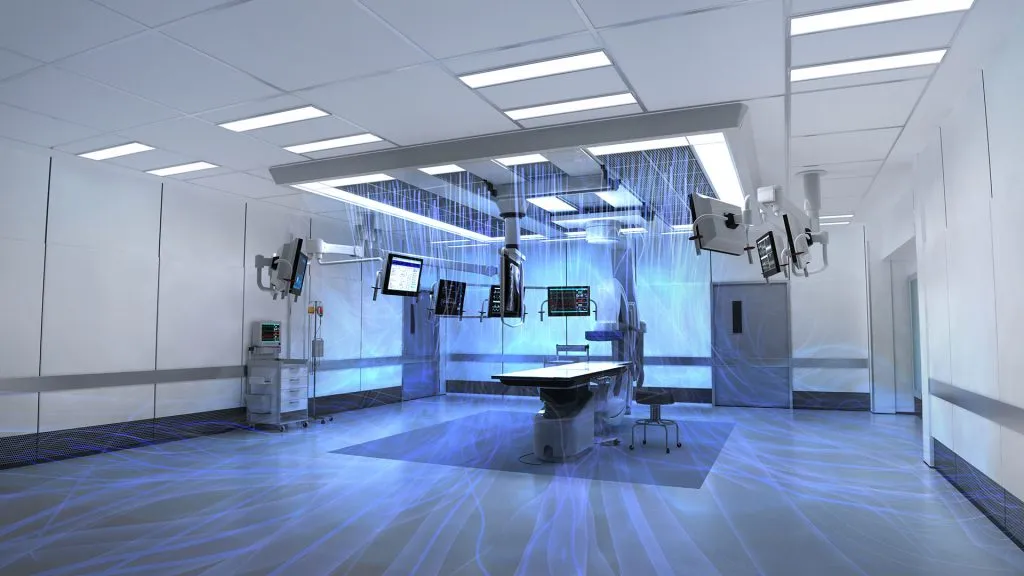


Our portfolio demonstrates extensive experience in indoor climate optimization. From small classrooms to large-scale data centers and industrial warehouses, every project is unique. We create suitable indoor environments for both people and critical processes.
We are typically involved in new-build and renovation projects where new building and HVAC designs are only available in computer drawings. Therefore, our consultancy is primarily based on Computational Fluid Dynamics (CFD) simulations, enabling us to:
CFD allows design validation before construction, preventing costly modifications later in the project.
In some cases, assessing existing buildings and HVAC systems is required. Therefore, we perform on-site measurements of airflow rates and temperatures. These measurements are used as input for our simulations, or to validate our simulation models.
Our experience shows that early-stage airflow analysis significantly reduces risk.
Identifying ventilation or thermal issues during the design phase keeps mitigation costs low and prevents project delays. When airflow problems are discovered late in the process, design changes become far more disruptive and expensive.
Based on our simulations and measurements, we identify potential issues and propose design improvements. By collaborating with the design team, we determine which design changes are feasible and which modifications should be validated through follow-up assessments. We remain closely involved until all stakeholders are satisfied with the final indoor climate performance.
Our analyses support compliance with relevant international standards, codes, and guidelines, including ISO cleanliness standards for controlled environments.
We help clients demonstrate that their HVAC and ventilation systems meet performance requirements for safety, hygiene, and operational reliability.
Made by 