Leiden, Netherlands
Swimming pool and skating rink De Vliet
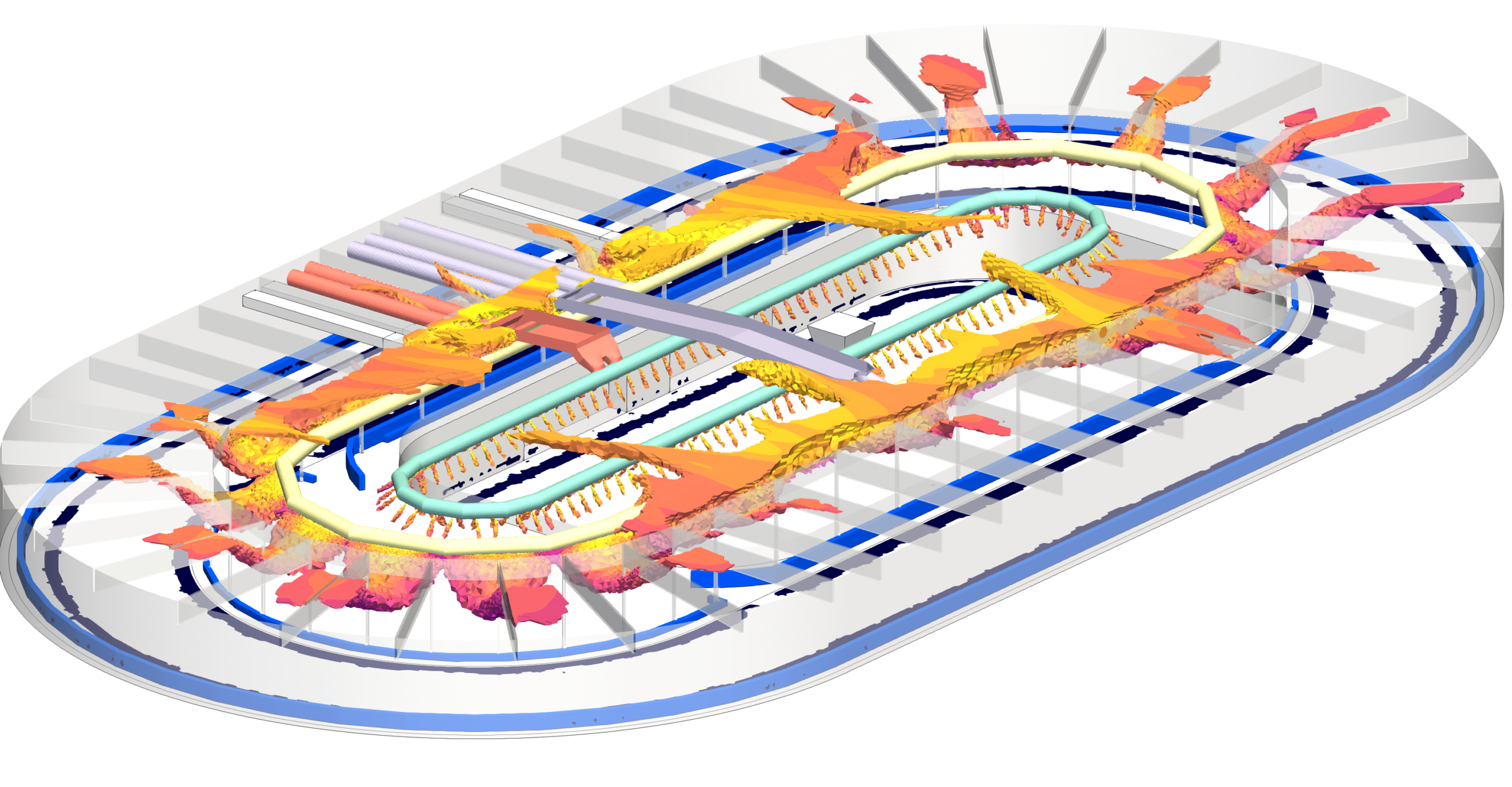
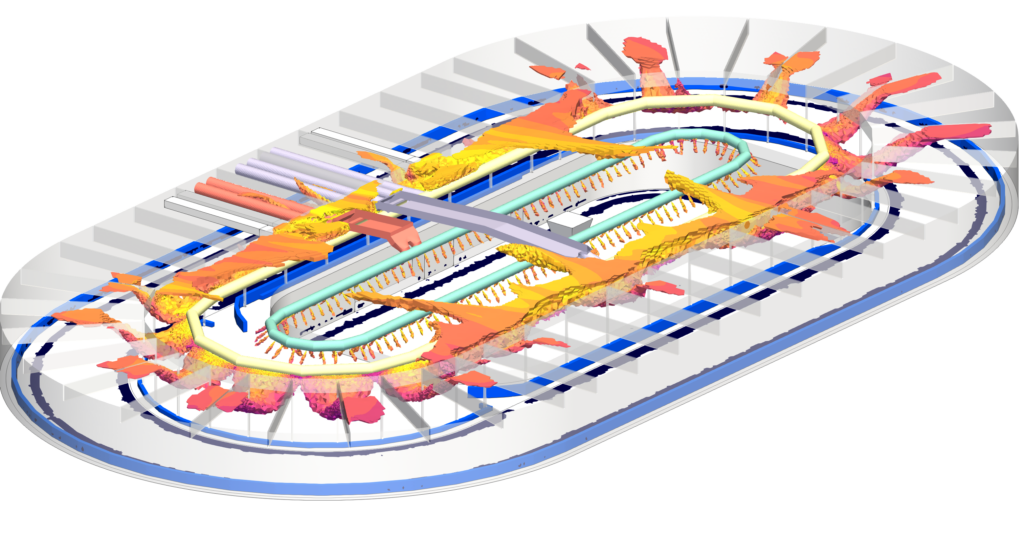
simulation of the airflow and temperature distribution of the air ducts
In 2019 the municipality of Leiden, The Netherlands took the initiative to realise a new sports centre. This facility replaces an existing swimming pool and adds new activities. The goal is to reach a 100% gas-free facility, while creating a place for recreational sport activities and professional athletes.
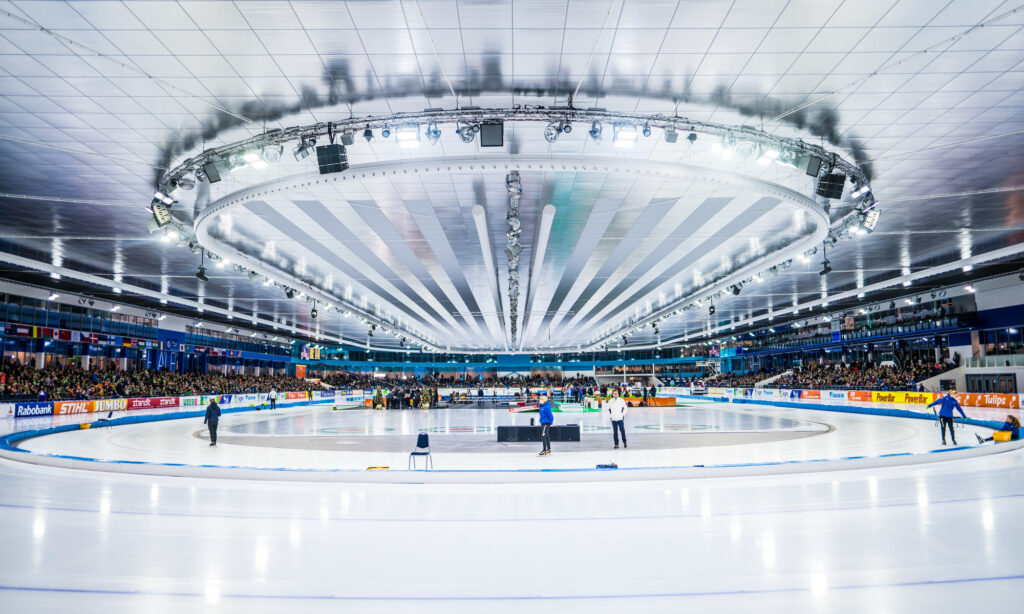
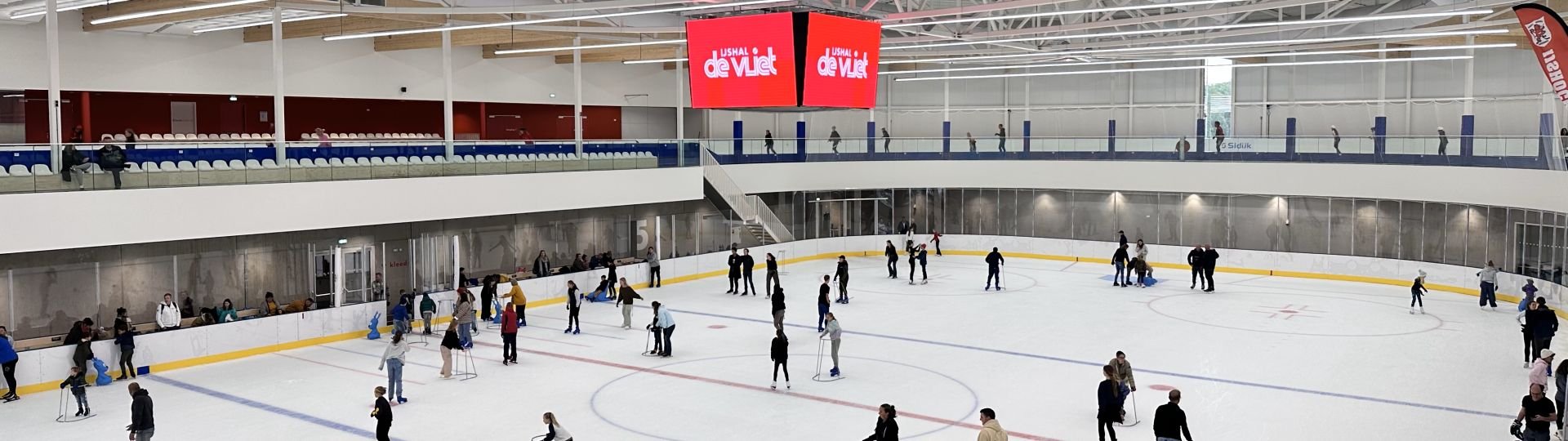
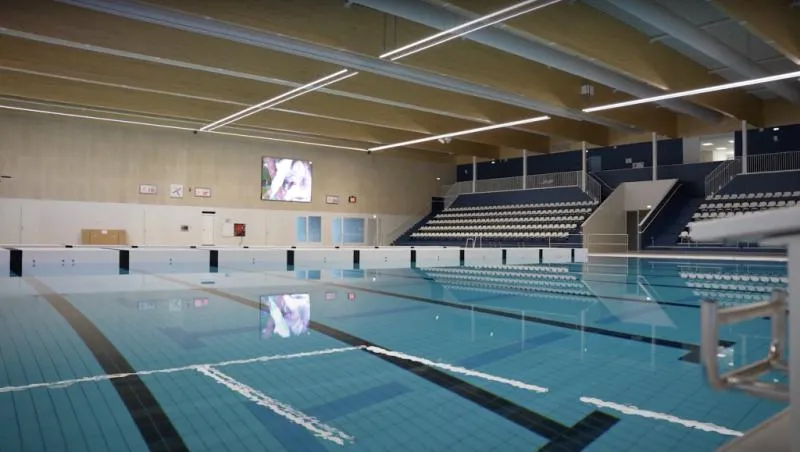
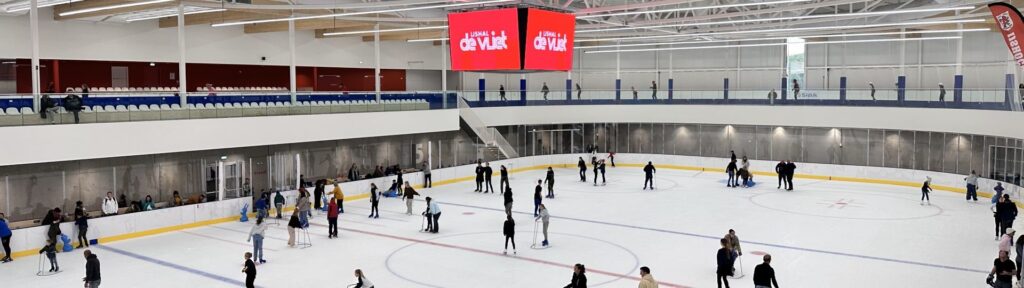
Swimming pool and skating rink De Vliet was opened in 2023 as a result of this initiative. It houses several skating rinks (speed skating, short track, ice hockey, figure skating) and a swimming pool for water polo and short course swimming. The heat that is extracted to cool the ice rink is used to heat the swimming pool, thus realising the sustainability goals.
Case details
The challenge
Fresh air is distributed with textile ducting made by KE Fibertec. This ducting ensures that fresh air is evenly spread, while comfort levels remain high. KE Fibertec asked Actiflow to perform CFD calculations during the design of the building and HVAC system. In this case we simulated the flow of heat and air in the ice rink when the textile ducting was in place.
“We are very pleased from the quotation up to the realization of the assignment given to Actiflow. The proper mapping of our request by Actiflow ensures a smooth lead time of the project. The flexibility and knowledge of the Actiflow employees is also an added value for us as an air distribution hose supplier, so that we achieve a good result together. Working with a single point of contact from the moment of request to realization is very pleasant.”
KE Fibertec
Results
KE Fibertec used the results of our simulations in several ways. First, the results were used to optimize the performance of the HVAC system by optimizing the amount of air, the air temperature, the size of the perforations in the textile ducting and the direction of inflow. Second, the client used the results to check during the design if the performance criteria could be met. Last, but not least, the results were handed over to the design team, convincing them that using textile ducting from KE Fibertec would ensure the desired performance.
Related Projects
Renovation Ahoy